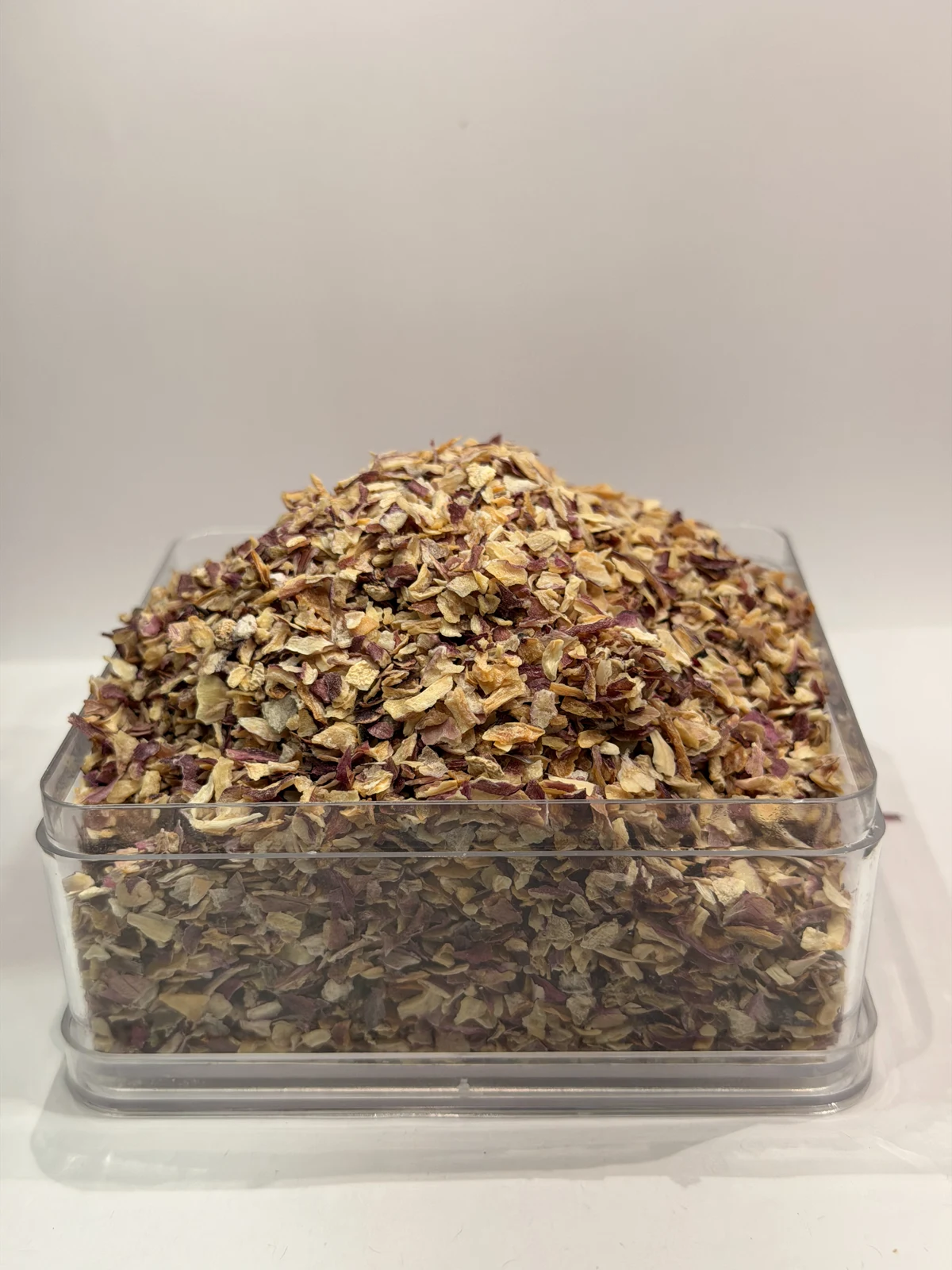
Dehydrated onion is available in several particle sizes because food manufacturers need different combinations of visible texture, flavour distribution and processing convenience. A soup developer may want recognizable pieces, while a snack seasoning blender needs a finely distributed ingredient. Choosing the right form starts with the finished food and the process used to make it, rather than with a broad claim that one onion ingredient is best.
This guide explains the main formats and the questions commercial buyers should ask before requesting a sample or bulk quotation. Specifications, treatments, packaging and availability must be confirmed for the particular product being purchased.
What dehydrated onion means
Dehydration removes water from prepared onion material. Cutting and milling then create different ingredient formats. The resulting product is an ingredient for a recipe or manufacturing process; it should not be treated as a direct, weight-for-weight replacement for fresh onion without a formulation trial.
Removing much of the water changes how onion is transported, measured and incorporated. A dry ingredient can simplify some production steps, but the result still depends on moisture control, storage, recipe composition and the buyer's handling procedures. Dehydration alone does not establish a ready-to-eat status or prove that every microbiological requirement has been met.
Fresh and dehydrated ingredients serve different briefs
Fresh onion contributes water as well as onion solids. A dehydrated product introduces a different balance. When reformulating a sauce, assess the complete water and solids balance, not just the amount of onion added. In a dry seasoning, check how the ingredient behaves during blending, filling and storage before transferring a kitchen recipe to production.
Main dehydrated onion types
Flakes and kibbled onion
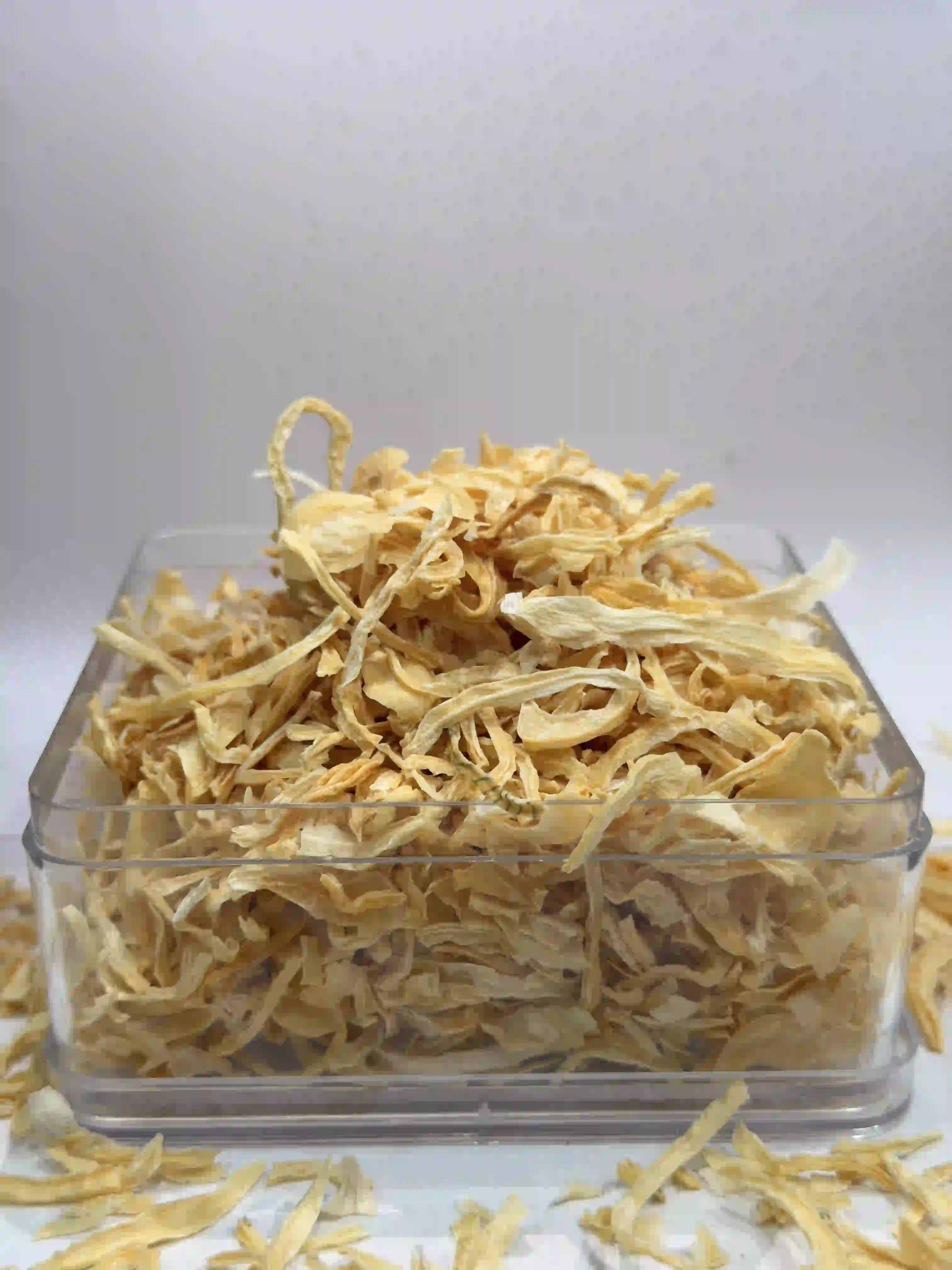
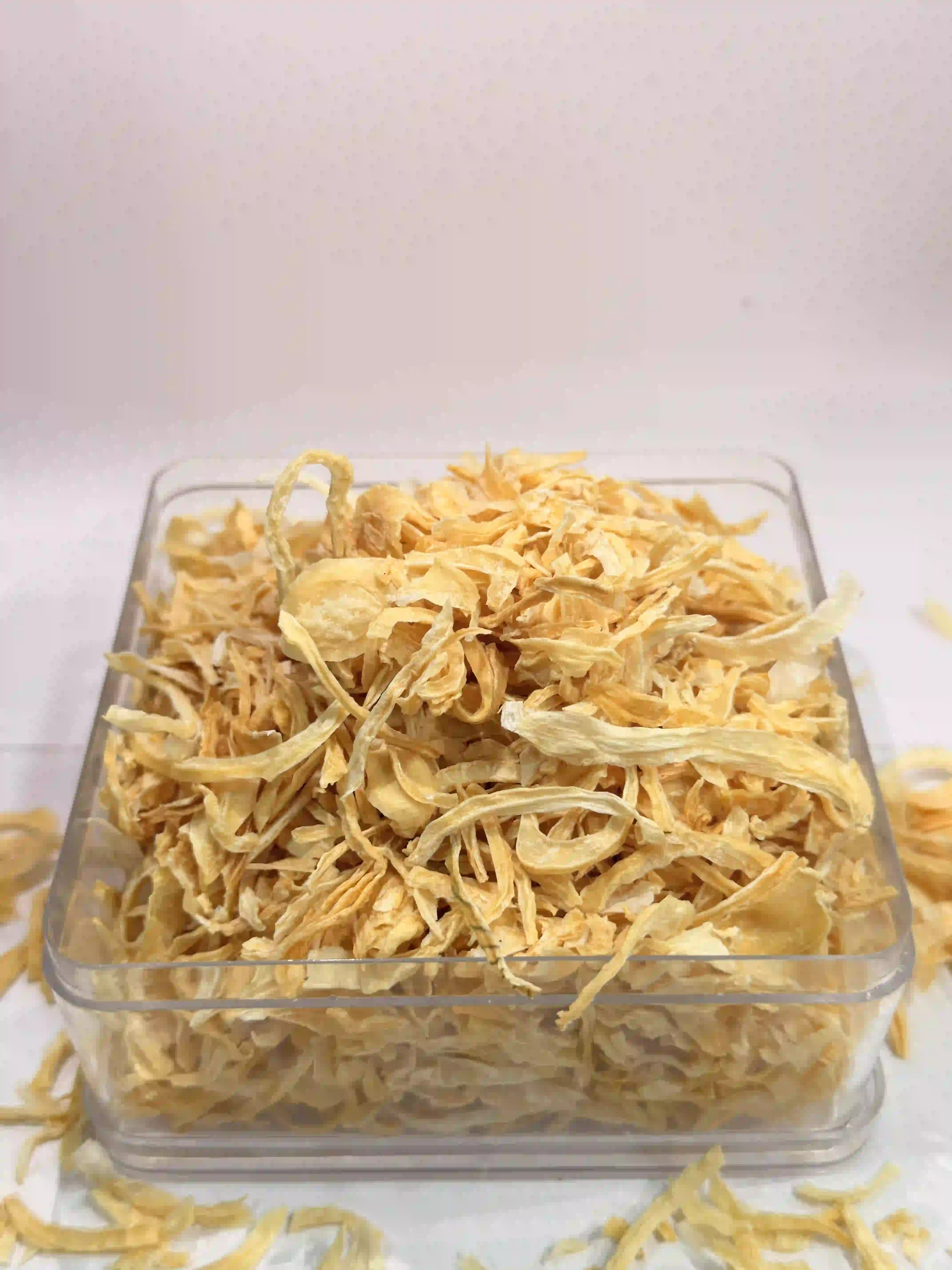
Flakes are commonly selected where a visible onion piece is useful. The term kibbled is also used in ingredient trade, but the name alone does not define a universal dimension. Ask for the actual cut-size range, the acceptable proportion of fines and a representative sample. See the separate flakes and kibbled onion guide for a purchasing comparison.
Minced onion
Minced onion is a smaller-piece option for recipes where large flakes would look out of place. It can suit sauces, instant foods and seasoning preparations, subject to the required texture and process. A supplier's minced grade should be compared with the buyer's target particle distribution rather than assumed to match an existing ingredient.
Granules and powder
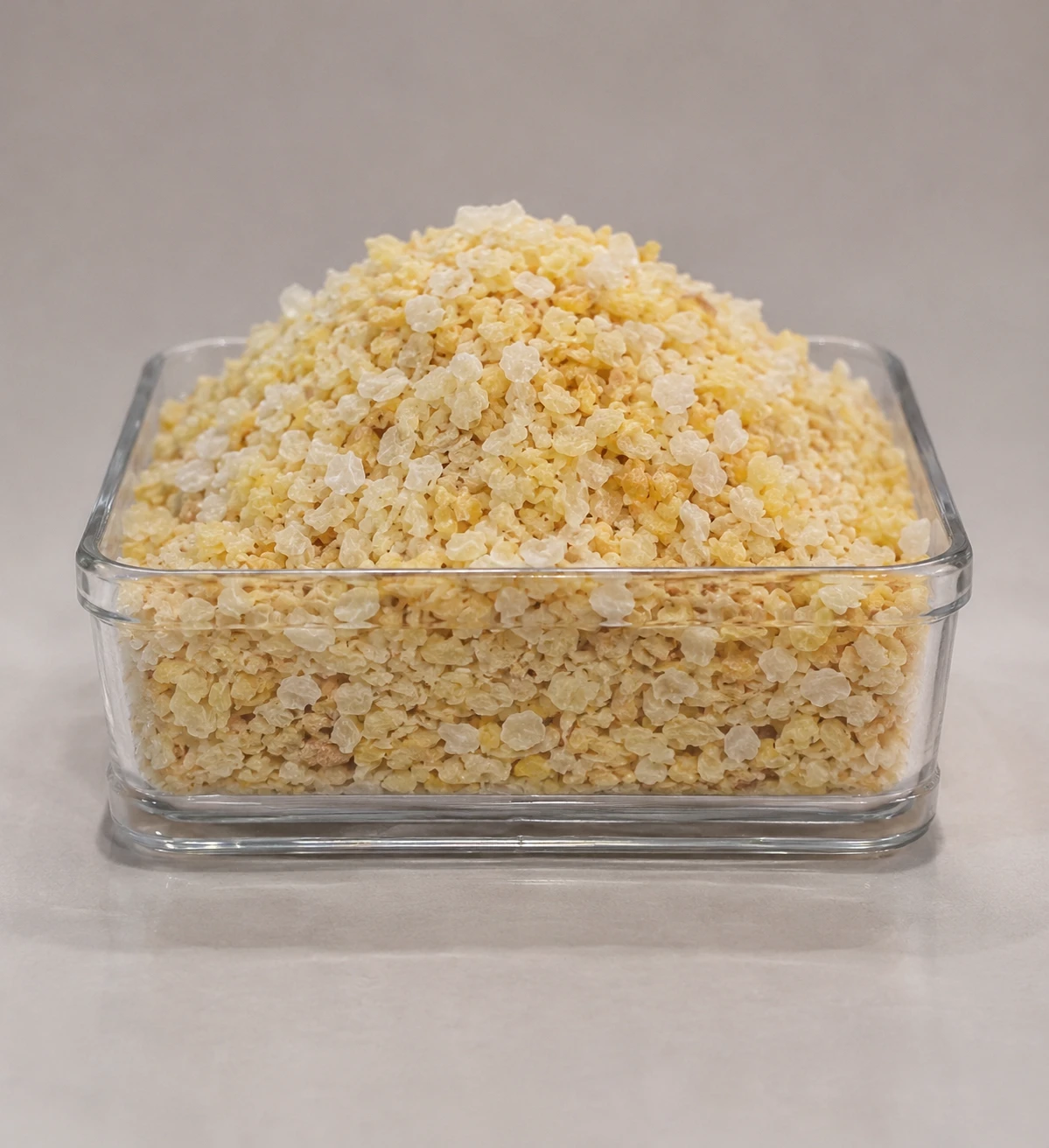
Granules provide a granular dry format. Powder is finer and is often considered when visible onion pieces are not wanted. Neither label guarantees a particular mesh size. Ask the supplier to identify the specification used for the sample and the commercial lot, including the test method where mesh or sieve limits matter.
Start with three questions: should the consumer see onion, how much water is available during processing, and when will the ingredient be introduced? These questions often narrow the selection more effectively than comparing ingredient names in isolation.
| Application brief | Starting point to evaluate | Trial question |
|---|
| Soup with visible vegetable pieces | Flakes or minced onion | Is the texture appropriate at serving time? |
| Dry snack coating | Powder or suitable granules | Does the coating distribute evenly? |
| Sauce with a smooth appearance | Fine powder | Are there lumps or unwanted particles? |
| Seasoning blend with visible inclusions | Granules or minced onion | Do particles segregate during handling? |
These are trial starting points, not fixed rules. A company's manufacturing equipment, recipe and sensory target determine whether a grade is appropriate.
Benefits to evaluate commercially
Dry onion formats can reduce preparation work associated with handling whole bulbs and allow ingredients to be measured into a repeatable recipe. However, the value of that convenience should be assessed against the buyer's actual process. Labour, packaging, waste, trial results and the cost of any recipe adjustment belong in the commercial comparison.
Consistency also needs a defined reference. A repeatable ingredient programme depends on an agreed specification, representative sampling and change notification. A product photograph or a general description cannot replace those controls. Buyers should avoid interpreting a statement such as industrial grade as proof of compliance with their own technical requirements.
What to request before a bulk order
Give the supplier the intended food application, preferred form, trial quantity and delivery destination. Request the current product specification and ask which documents can accompany a shipment. If a treatment, certification or test is essential, identify it explicitly and obtain confirmation for the offered product instead of assuming it applies to every onion ingredient.
For an existing recipe, share the characteristics that matter: visible particle size, colour expectations, aroma, the process stage at which onion is added and any packaging constraints. A confidential recipe is usually unnecessary for an initial discussion; a clear application brief helps the supplier propose a relevant starting sample.
Running a useful sample trial
Compare candidate samples under the same conditions. Record the sample identity, recipe version, addition level, mixing sequence and assessment time. For hydrated foods, inspect the product at the actual point of consumption, because immediate appearance may differ from the finished result after the normal process and holding period.
Keep a retained reference when a sample is approved. Before a commercial order, confirm that the offered grade corresponds to that reference and clarify how changes will be communicated. A good first sample is useful evidence, but it does not replace incoming checks on future deliveries.
Frequently asked questions
Is onion powder always stronger than flakes?
Particle size alone is not a reliable measure of flavour strength. Origin, processing, storage and the recipe all influence the result. Compare products in the intended application rather than relying on a universal strength ratio.
Can one dehydrated onion form replace another?
Sometimes, but a substitution can change appearance, mixing and hydration behaviour. Review the recipe and run an appropriate trial before approving a replacement for production.
Does a dried ingredient need controlled storage?
Yes. Follow the supplier's storage instructions and protect opened material from moisture, contamination and damage. Use the lot's stated shelf-life information rather than a general internet estimate.
Choosing the next step
Define the application first, shortlist suitable formats and approve them against documented requirements. Explore the onion ingredient range or request a quotation or sample with your required quantity and destination. OM Food and Spices LLP can discuss available forms and confirm the specification and supply details relevant to your enquiry.