Onion powder, onion granules and minced onion can all contribute onion character to food, but they solve different formulation problems. A buyer choosing only by price may overlook the effect of particle size on visibility, distribution and process behaviour. The right comparison starts with the finished product and the manufacturing method.
This guide provides a selection framework for food developers and bulk buyers. It does not assign universal mesh ranges to trade names: suppliers should confirm the specification of the particular grade offered.
Onion powder
White onion powder is the fine-format option in this comparison. It is often evaluated when visible onion particles are unwanted. Examples include smooth sauces, seasoning coatings and dry recipes where the developer wants onion distributed throughout the product rather than present as recognizable pieces.
Fine does not automatically mean easy to disperse. Mixing equipment, ingredient addition order and the rest of the recipe influence whether a powder incorporates evenly. Check for lumps, uneven concentration and practical handling losses during trials.
Onion granules
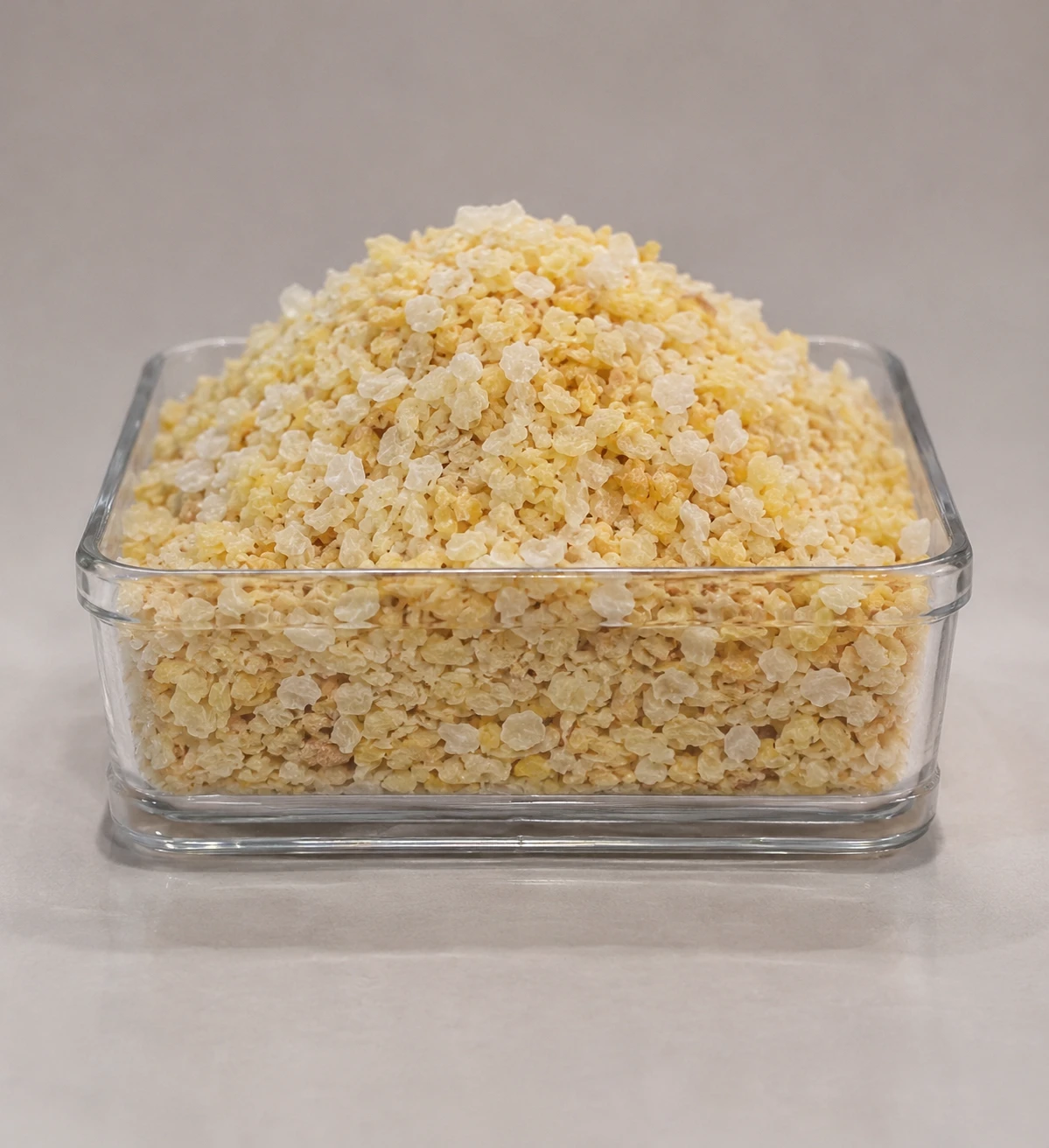
Onion granules provide a granular format between fine powder and larger visible pieces in many supplier ranges. They can be considered for dry mixes and recipes where a fine granular texture is acceptable. Ask for size limits instead of assuming that the word granules specifies a single standard.
Minced onion
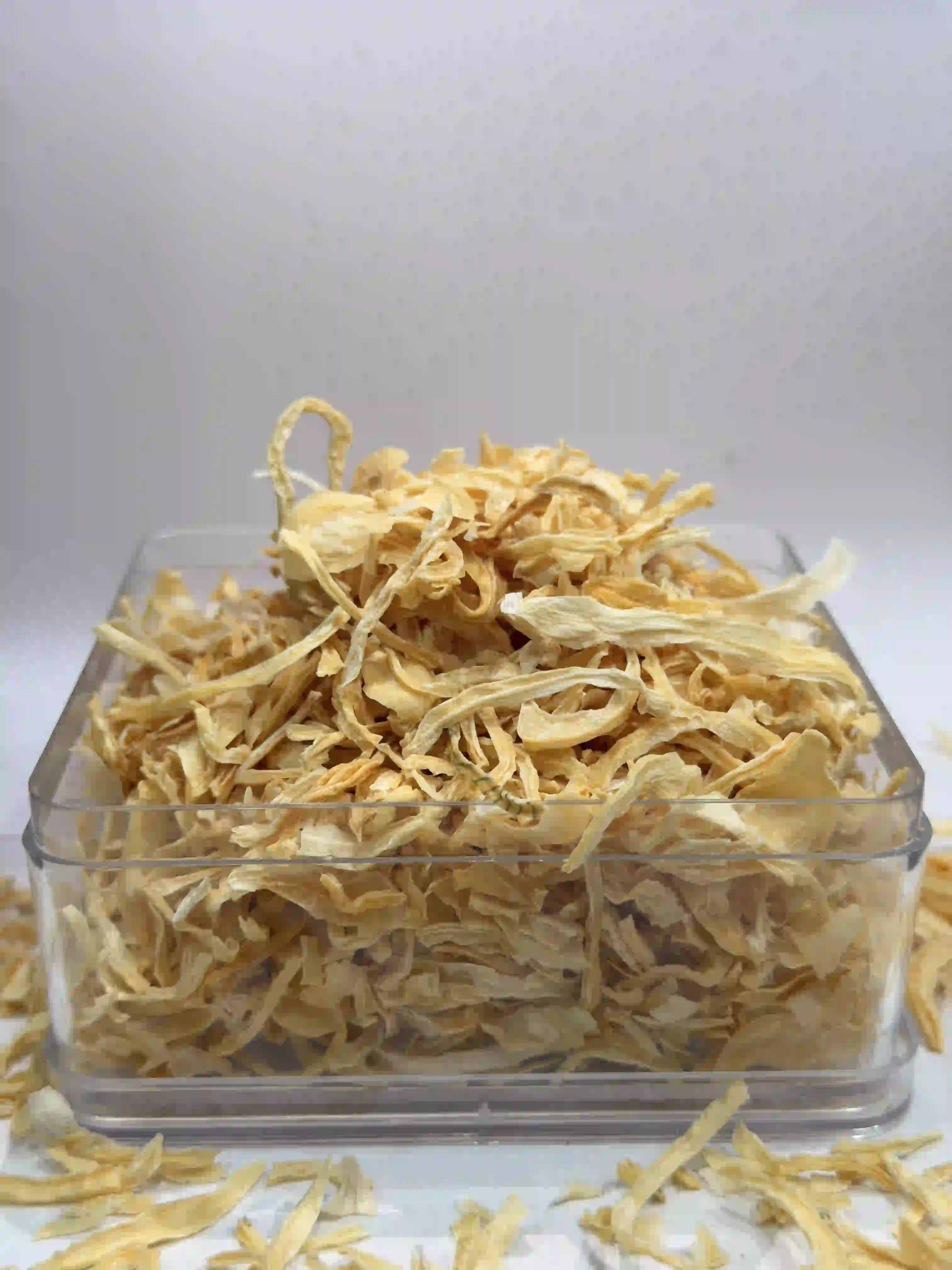
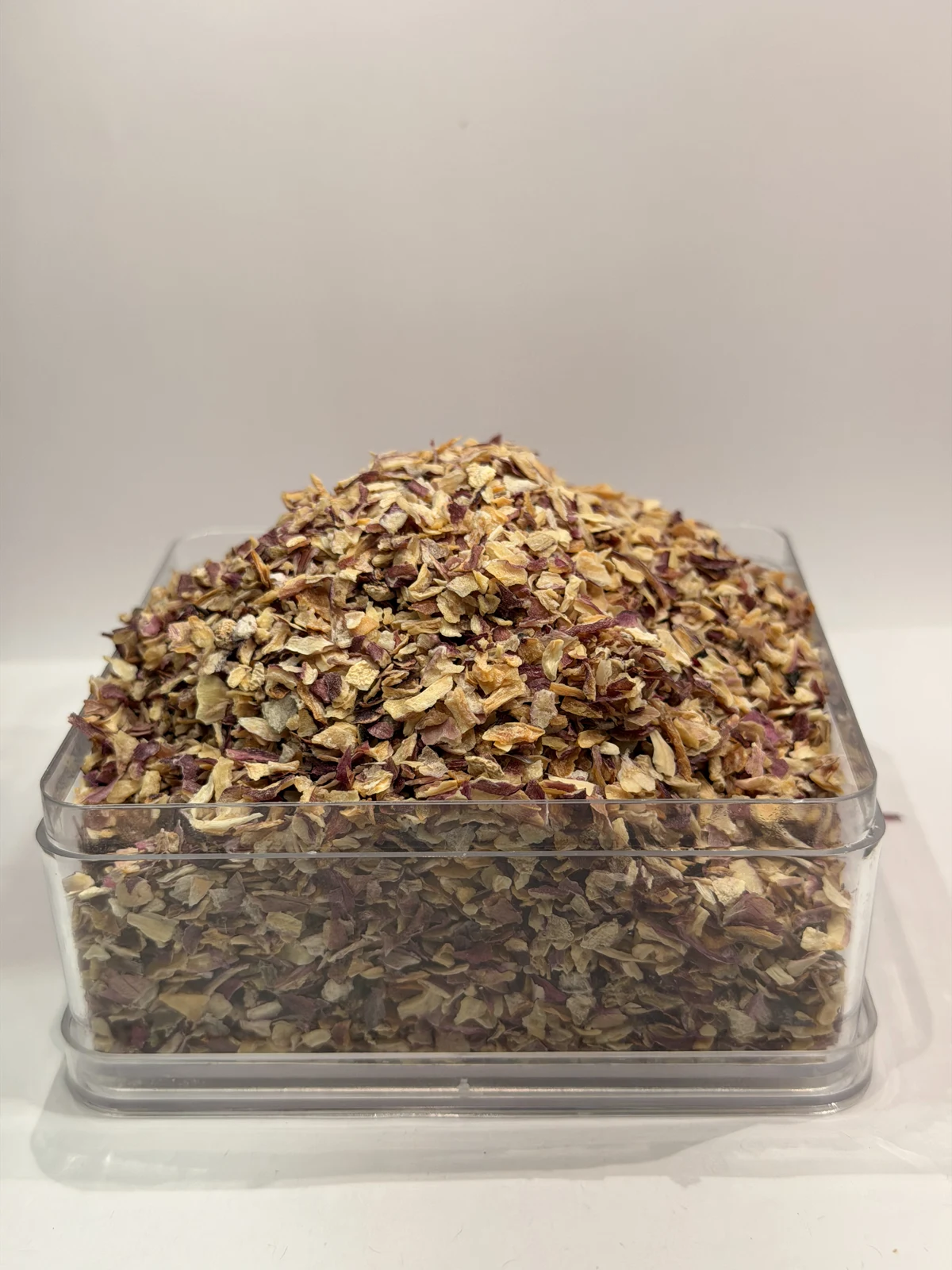
Minced onion provides smaller visible pieces. It is a candidate when a recipe benefits from some onion texture but large flakes are undesirable. Evaluate the ingredient after the same hydration, heating and holding conditions used for the final food.
Use appearance as the first decision
Decide whether a visible onion inclusion belongs in the product. For a smooth sauce, an obvious piece may be a defect. In a chunky soup or savoury preparation, the same piece may be desirable. Consumer expectations and the recipe specification should determine the target, rather than a general preference for a particular ingredient form.
If several formats appear suitable, compare them at a documented starting addition level. Do not change particle size, ingredient level and processing method at once; otherwise the trial may not reveal which change affected the result.
Compare distribution and mixing
Powder, granules and minced pieces do not necessarily travel through equipment in the same way. A dry seasoning may look uniform immediately after mixing but separate during transfer or packing. A wet recipe may require an adjusted addition sequence to prevent local concentrations of powder.
Production-scale observations are especially valuable when approving a new form. Record feeder behaviour, transfer losses, mix time and the consistency of samples taken from different points in the batch. A supplier's representative sample is a starting point, not a complete process approval.
Match the ingredient to the application
| Application | Format to start evaluating | Reason to check another form |
|---|
| Smooth sauce | Powder | The recipe develops lumps or unwanted consistency |
| Dry snack seasoning | Powder or fine granules | Coating coverage or blend uniformity is poor |
| Instant soup with inclusions | Minced onion | Serving-time pieces are too visible or too firm |
| Bakery seasoning | Powder or granules | Appearance or distribution differs from the target |
| Commercial savoury mix | Granules or minced onion | Handling causes separation or texture variation |
These examples describe useful trial directions. They are not guarantees of suitability. A developer should validate the ingredient within the complete formulation and the intended use conditions.
Water balance and texture
When an onion ingredient is introduced into a hydrated food, assess the effect on the whole recipe. Different forms may produce different perceptions of texture, and the addition level can alter the solids balance. If a fresh onion recipe is being converted, the water originally contributed by fresh onion also belongs in the calculation.
Avoid adopting an internet conversion ratio without a trial. The desired flavour, incoming ingredient and processing conditions all influence the quantity needed. Record the approved recipe rather than letting operators adjust the amount informally between batches.
Purchasing and specification questions
A clear enquiry identifies the food application, the desired form and any essential technical conditions. Ask for the actual size specification, the grade reference and the documents relevant to your purchasing programme. If the recipe needs a specific treatment or certification, request written confirmation for that product.
Check how a sample relates to the commercial shipment. A photograph of powder or granules cannot demonstrate lot consistency. Where a grade is approved for repeat use, reference it in the purchase order and establish how an alternative will be assessed if supply changes.
A simple comparison protocol
Prepare the same base formulation with each candidate form. Record addition level by weight, ingredient sequence, mixing conditions and the point at which each sample is assessed. Compare appearance, flavour balance and process behaviour using criteria agreed before the trial.
If the best-performing sample needs a different level, make a second controlled comparison. Include ingredient cost and operational effects in the commercial review. A lower price per kilogram can be outweighed by poor distribution, additional handling or an unsatisfactory finished texture.
Frequently asked questions
Is minced onion the same as onion granules?
Names and cut-size ranges can differ between suppliers. Compare the actual specifications and samples. Do not assume equivalence because the ingredients look similar in a small photograph.
Is powder suitable for every dry seasoning?
No single form is ideal for every blend. Consider the other components, the application equipment and the required appearance. Verify uniformity after normal handling.
Can I mix formats in one recipe?
That can be a formulation option when different texture and distribution goals exist. Treat each component as a controlled ingredient and assess the combined result.
Making the selection
Use visibility, distribution and manufacturing behaviour as the main comparison points. Then approve a specific grade against a recorded recipe. For a related large-piece comparison, read the flakes and kibbled onion guide. To discuss a suitable sample, send your application and quantity.