Onion and garlic ingredients are used across savoury food development, but the best format depends on the application. A snack coating needs different particle behaviour from a chunky sauce, and an instant soup has different preparation conditions from a commercial kitchen recipe. Treating all dehydrated ingredients as interchangeable can create avoidable formulation and production problems.
This article compares application needs in snacks, sauces and seasoning blends. It is intended for developers and commercial buyers choosing samples, writing specifications or reviewing a proposed ingredient substitution.
Snack seasonings and coatings
For a snack coating, evaluate how the seasoning reaches and remains on the food surface. The onion or garlic format is only one component of that system. Particle distribution, the other blend ingredients and the application equipment all influence the result.
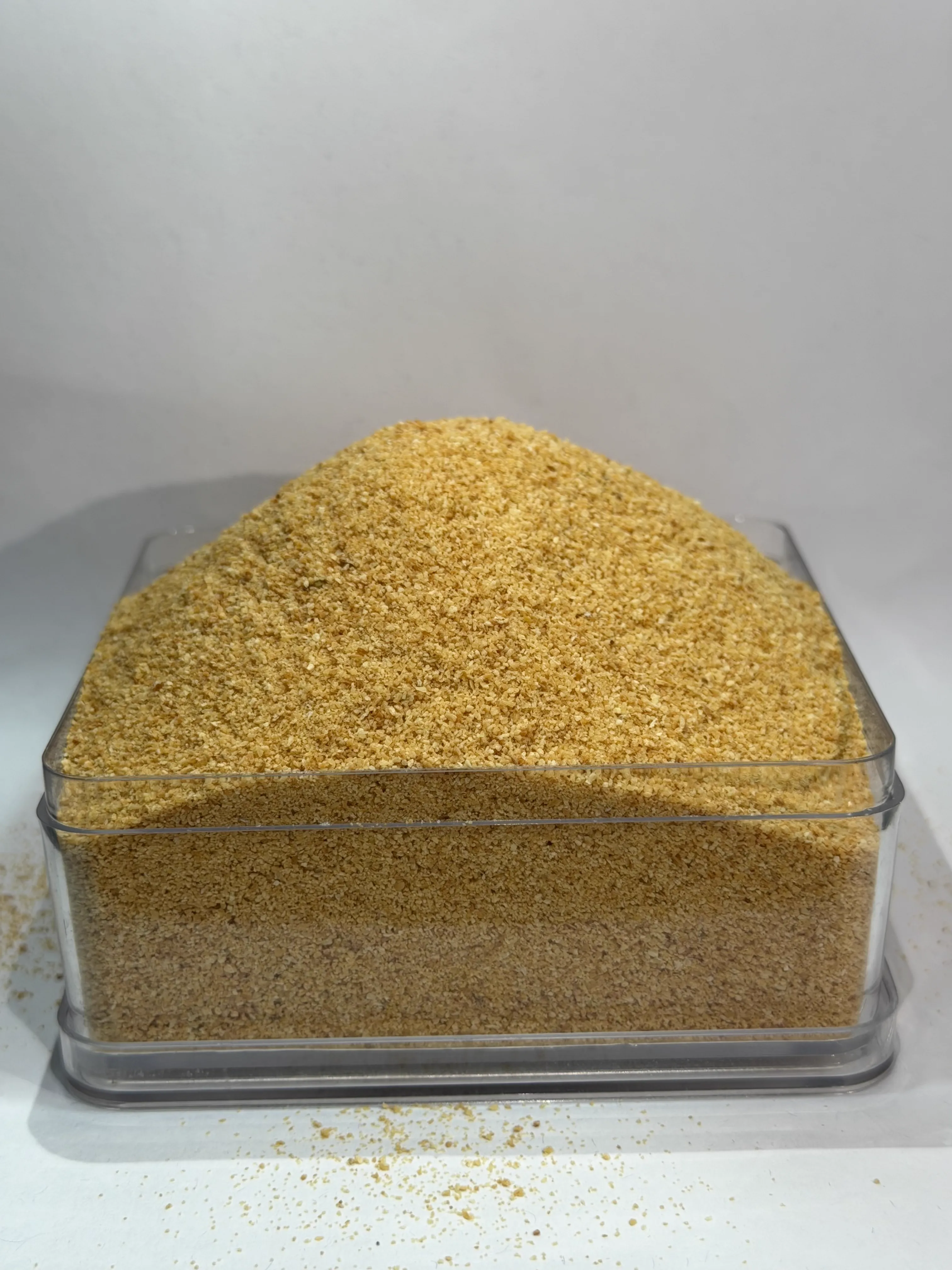
Onion powder and garlic powder are fine-format options to consider. Suitable granules may also be relevant depending on the desired texture. The objective is not simply to choose the finest ingredient; it is to achieve the intended distribution and eating experience under actual production conditions.
Check the finished surface
Assess coating appearance and flavour balance on the snack, not only in the seasoning bag. Take samples from appropriate points in a trial run and record the process settings. A uniform dry blend can still produce uneven results if transfer or application conditions differ.
Sauces and condiments
Sauce developers should decide whether onion and garlic are intended to be visible. A smooth sauce may need a fine ingredient, while a textured condiment may benefit from minced material or flakes. The desired appearance should be explicit in the development brief.
Assess ingredients after the complete mixing, heating and holding sequence. The result seen immediately after addition may differ from the final product. Record any formulation changes, including water adjustments, rather than making informal corrections during the trial.
Consider process order
Powders and visible pieces can require different attention during incorporation. Establish when the ingredient is added and how it is distributed. If a preparation step is required, document it and include the relevant hygienic controls in the production procedure.
Dry seasoning blends
Dry blends need ingredient compatibility during mixing, transfer, packing and customer use. Different particle properties can encourage segregation. Evaluate the blend after representative handling instead of assuming that the initial mix remains unchanged throughout the supply route.
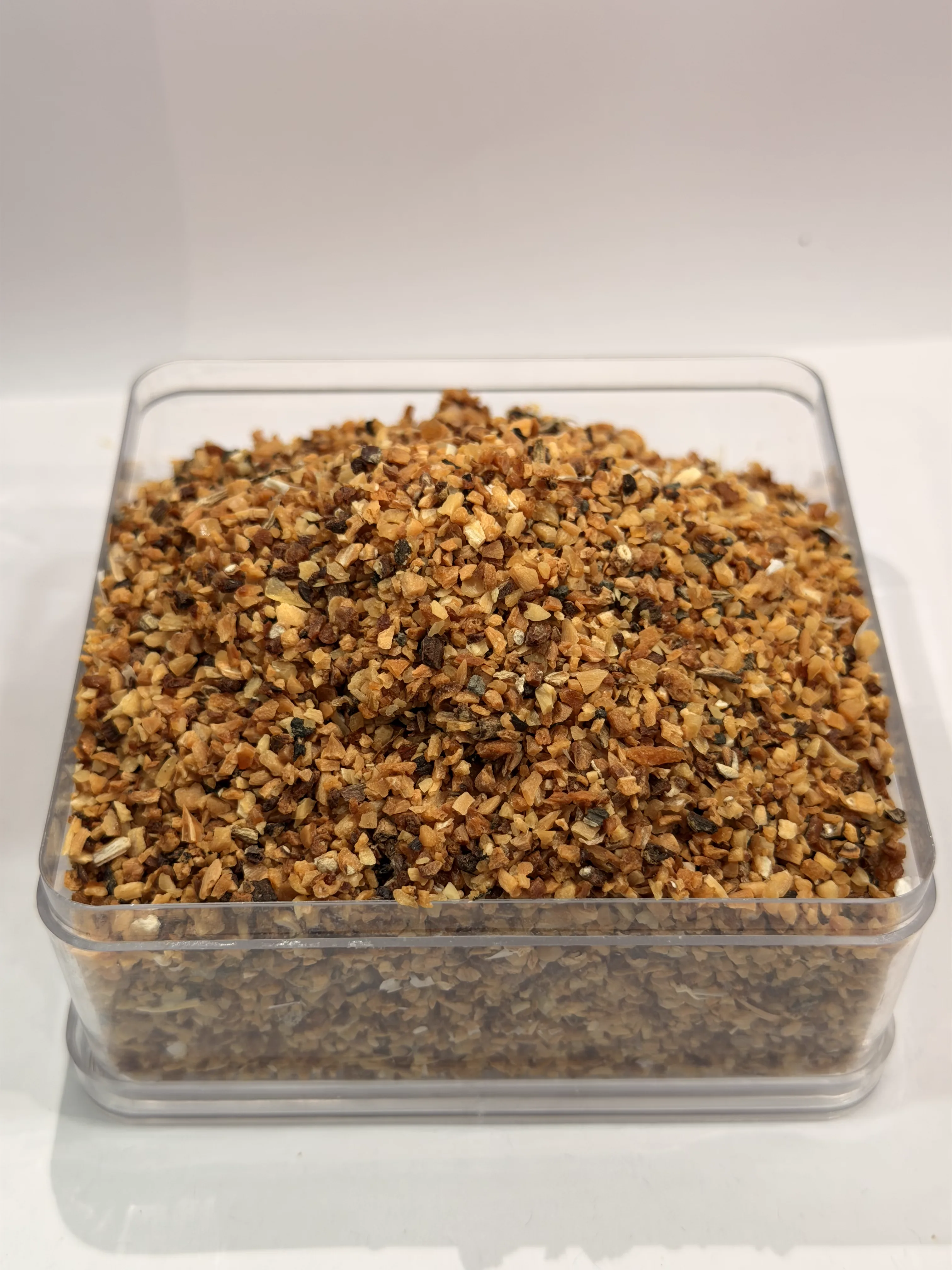
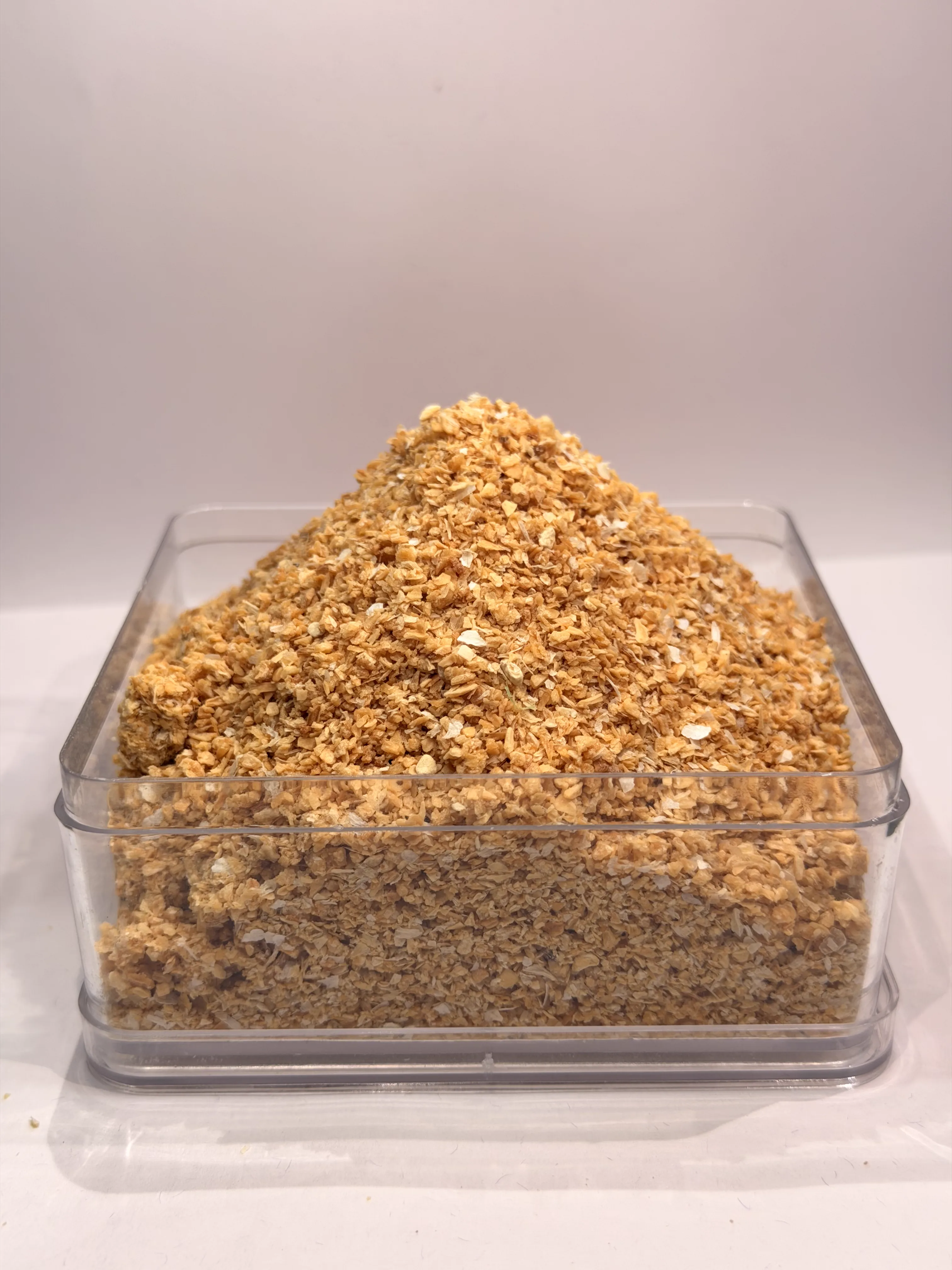
Where visible pieces are wanted, minced onion or minced garlic may be candidates. Where large inclusions are undesirable, powder or suitable granules may be more relevant. Compare actual specifications because trade names do not define universal size limits.
Soups and prepared foods
Instant foods introduce another variable: the preparation performed by the customer. A product developer should test the intended instructions and reasonable variation in preparation. The ingredient must be assessed at serving time, including any texture that remains after normal preparation.
For prepared meals, include manufacturing, storage and reheating stages relevant to the recipe. This is particularly important when visible onion or garlic pieces form part of the product's sensory identity. Approval based on a freshly mixed kitchen sample may overlook later changes.
Savoury bakery and other applications
Onion and garlic may also be evaluated in savoury doughs, toppings and commercial mixes. The choice depends on appearance, distribution and the complete process. A visible piece suitable for a topping may be unsuitable inside a fine-textured product.
In these applications, process development should consider the other ingredients as well. If a new onion or garlic grade changes the result, repeat the comparison under controlled conditions before attributing the difference to one factor. A structured trial produces more useful information than broad claims about ingredient strength.
Comparing application requirements
| Food category | Primary evaluation point | Additional production check |
|---|
| Snack coating | Coverage and flavour balance | Transfer and application uniformity |
| Smooth sauce | Dispersion and appearance | Addition sequence and lump formation |
| Textured condiment | Visible inclusion and bite | Full-process texture |
| Dry seasoning | Blend distribution | Segregation after handling |
| Instant soup | Serving-time performance | Customer preparation conditions |
| Savoury bakery | Texture and distribution | Relevant mixing and baking process |
The table is a starting framework. It should be adapted to the buyer's product and approval programme rather than used as a universal prescription.
Writing an application-led enquiry
Tell the supplier what the finished food is, whether visible particles are wanted and how the ingredient is processed. Include target quantity, destination and any essential technical requirements. If there is an approved reference, identify the properties that a proposed alternative must match.
Ask for the current product specification and the documentation relevant to your programme. Do not assume every format has the same treatment or intended-use status. When an ingredient is purchased for a food without a later control step, raise that requirement explicitly with the supplier and your technical team.
Documenting the decision
For a multi-application supplier trial, keep separate results for each recipe. A garlic ingredient may pass a dry seasoning assessment but need more work in a wet sauce. Combining those results into one overall score can conceal a failed use case. Record which application has been approved, which process settings were used and which additional trials remain before the ingredient is released for wider use.
Frequently asked questions
Can the same powder be used in a sauce and a snack coating?
It may be suitable for both, but approval should cover each application. A result in one recipe does not establish performance in another process.
Are visible particles always better in premium foods?
That depends on the product brief and consumer expectations. Some foods call for smoothness; others benefit from inclusions. Choose the format against the intended result.
How should a substitution be approved?
Compare a representative sample with the existing reference, document the trial and obtain the approvals required by the buyer's change-control procedure.
Turning the application into a specification
Connect format choice with recipe, process and serving conditions. Explore the product catalogue and request an application-focused sample. For the commercial approval side, read the bulk supplier guide.